
The debate between Bengaluru and Hyderabad has been ongoing for years. Both cities have emerged as major economic engines, attracting businesses, startups, talent, and real estate investment. While Bengaluru remains India’s leading technology hub, Hyderabad has rapidly established itself as a strong contender with world-class infrastructure, a thriving startup ecosystem, and growing global recognition.
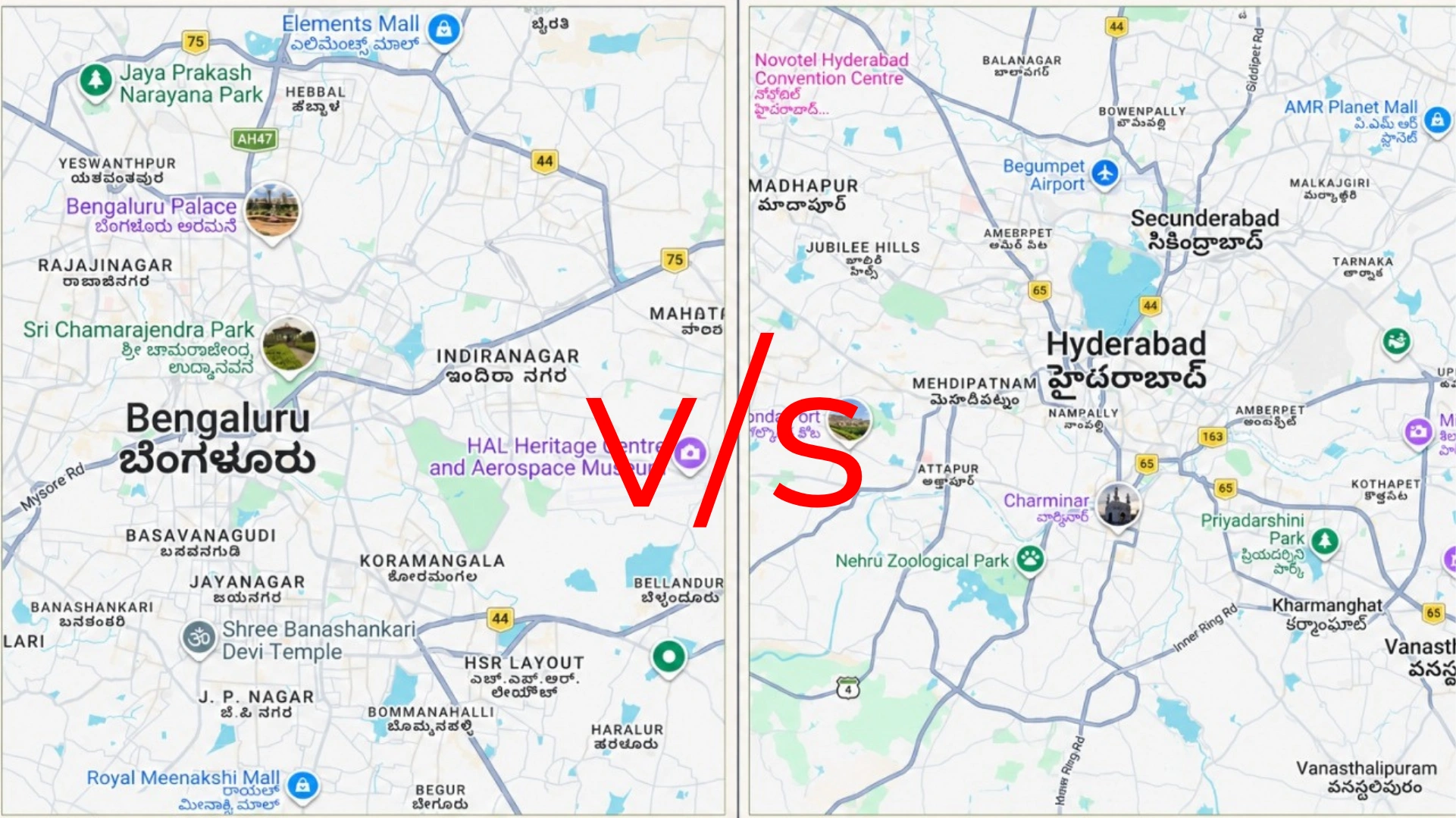
For homebuyers, investors, and businesses, the discussion is not about choosing a winner. Instead, it is about understanding how the growth of both cities creates opportunities across the real estate sector.
Bengaluru remains the country’s largest technology and startup hub, leading in IT exports, venture capital funding, and innovation-driven employment. The city’s mature ecosystem continues to attract entrepreneurs and professionals from across India and around the world.
This sustained growth has helped maintain strong demand for residential communities, commercial office spaces, and mixed-use developments throughout the city.
However, industry leaders believe India’s success should not depend on a single city.
Speaking on the subject, B V R Mohan Reddy, Founder-Executive Chairman of Cyient and former Chairman of Nasscom, stated:
“What this nation requires is 20 Bengalurus. And Hyderabad is in the making.”
His statement highlights a growing consensus that India’s economic future depends on developing multiple world-class innovation hubs rather than concentrating growth in one location.
Over the last decade, Hyderabad has transformed into one of India’s most important innovation ecosystems. The city has attracted technology companies, startups, multinational corporations, and Global Capability Centres (GCCs) through a combination of strong infrastructure, business-friendly policies, and a skilled workforce.
Sateesh Andra, Managing Partner at Endiya Partners, highlighted the factors driving the city’s growth:
“Over the last decade, Hyderabad has evolved from a technology hub into one of India’s most important innovation ecosystems.”
He noted that Hyderabad’s strength lies in the convergence of scientific research, engineering talent, supportive institutions, global capability centres, and ambitious entrepreneurs.
These developments have also positively influenced Hyderabad’s real estate market, creating increased demand for residential projects, office spaces, retail centres, and supporting infrastructure.
Local Entrepreneurship Is Fueling Growth
One aspect of Hyderabad that continues to receive praise is its strong local entrepreneurial culture.
Prashanth Prakash, Chairman of UnboxingBLR, pointed to Hyderabad’s growing base of homegrown founders and innovators:
“What amazes me is the local entrepreneurship. There is a lot of local talent that is ready to build for India and the future.”
A thriving entrepreneurial ecosystem often creates a ripple effect across the property market, driving demand for housing, commercial developments, co-working spaces, and urban infrastructure.
Many experts believe the Bengaluru-versus-Hyderabad narrative has outlived its usefulness.
Rather than competing against one another, both cities are increasingly viewed as complementary growth centres that can strengthen India’s position on the global stage.
B V R Mohan Reddy emphasized this perspective when he said:
“Why should we compete with Bengaluru? We should compete with the world.”
This vision aligns with the broader goal of positioning India as a global innovation destination while encouraging sustainable development across multiple urban centres.
The numbers behind Hyderabad’s growth are impressive.
According to a recent report on the Hyderabad innovation ecosystem:
Looking ahead, Ramesh Byrapaneni, Managing Partner at Endiya Partners, believes the next phase will be even more significant:
“The last decade established Hyderabad’s credentials as a startup and innovation hub. The next decade will be defined by scale.”
For real estate investors, this continued expansion could support long-term demand across residential, commercial, and mixed-use developments.
While Bengaluru and Hyderabad continue to dominate discussions about innovation and growth, industry leaders are also encouraging greater focus on Tier-II and Tier-III cities.
Pullela Gopichand, Chief National Coach of the Indian Badminton Team, stressed the importance of balanced development:
“We must see these smaller cities grow.”
As infrastructure investments spread across India, emerging cities could become important contributors to future economic and real estate growth.
The Bengaluru-versus-Hyderabad debate may continue to generate headlines, but leading industry voices are sending a clear message: collaboration matters more than competition.
Bengaluru remains India’s technology powerhouse, while Hyderabad continues to strengthen its position as a leading innovation and business destination. Together, these cities are helping shape the future of India’s economy and creating new opportunities for businesses, residents, and property investors.
At Lakeys Properties, we believe understanding these economic and infrastructure trends is essential for making informed real estate decisions. As both cities continue to evolve, they are likely to remain among India’s most attractive destinations for investment, development, and long-term growth.